
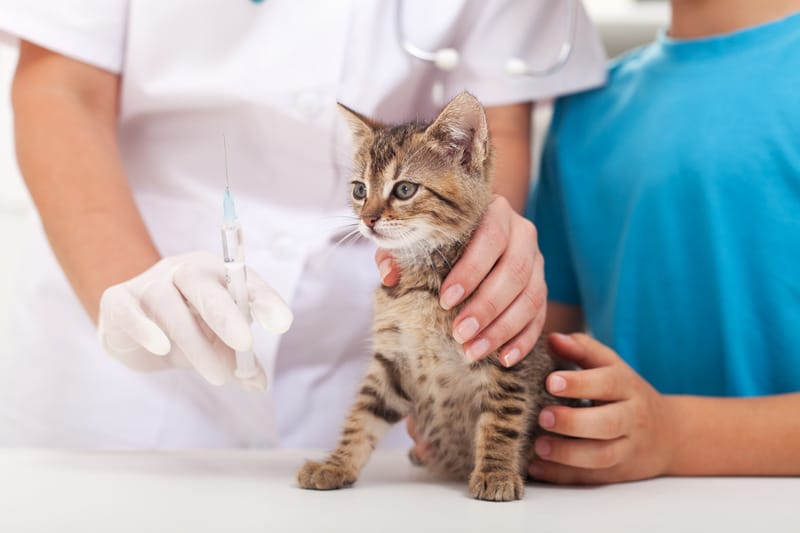
Welcoming a new puppy or kitten into your home is one of life’s greatest joys. Between the playful pounces, cute cuddles, and boundless energy, your new furry family member relies on you for everything—especially their health. One of the most critical steps you can take as a pet parent is establishing a preventative healthcare routine through timely pet vaccinations.
At Van Dyke Animal Clinic, we partner with pet owners to ensure young animals get the strongest possible start in life. During their first few months, young pets are particularly vulnerable to infectious diseases as the temporary immunity inherited from their mother’s milk begins to fade. Following a structured first-year vaccination schedule builds vital protection during this key developmental window.
The Puppy Vaccination Schedule
Puppies need a series of core vaccinations every 3 to 4 weeks, starting around 6 to 8 weeks of age and finishing around 16 weeks.
- 6 to 8 Weeks:
- Core: DHPP (Distemper, Infectious Hepatitis, Parvovirus, Parainfluenza).
- Lifestyle: Initial wellness exam, internal parasite screening, and flea/tick prevention discussion.
- 10 to 12 Weeks:
- Core: DHPP Booster.
- Non-Core (Based on Risk): Leptospirosis, Bordetella (Kennel Cough), or Lyme disease depending on outdoor exposure, boarding, or grooming needs.
- 14 to 16 Weeks:
- Core: DHPP Booster and Rabies (required by law).
- Non-Core: Boosters for Leptospirosis, Bordetella, or Lyme.
The Kitten Vaccination Schedule
Kittens follow a similar booster timeline to ensure their developing immune systems build adequate antibodies against high-risk feline pathogens.
- 6 to 8 Weeks:
- Core: FVRCP (Feline Viral Rhinotracheitis, Calicivirus, and Panleukopenia).
- Lifestyle: Deworming and initial health check.
- 10 to 12 Weeks:
- Core: FVRCP Booster.
- Non-Core: Feline Leukemia Virus (FeLV) test and initial FeLV vaccine (highly recommended for kittens and outdoor cats).
- 14 to 16 Weeks:
- Core: FVRCP Booster and Rabies.
- Non-Core: FeLV Booster.
Core vs. Non-Core Pet Vaccinations
When scheduling pet vaccinations, you will often hear veterinarians distinguish between core and non-core vaccines:
- Core Vaccines: Considered essential for all pets regardless of lifestyle because the diseases they prevent are widespread, highly contagious, or fatal (such as Rabies, Parvovirus, and Panleukopenia).
- Non-Core Vaccines: Recommended based on specific risk factors such as whether your cat spends time outdoors, if your dog visits dog parks, or if local environmental exposures exist (like tick-borne diseases).
During your visits to Van Dyke Animal Clinic, our team evaluates your pet’s environment, daily habits, and travel plans to craft a customized immunization plan tailored precisely to their needs.
What to Expect During Vaccination Visits
First-year veterinary visits are about more than just injections. Each appointment includes a comprehensive physical exam where our veterinarians check your pet’s heart, lungs, teeth, ears, eyes, and growth milestones. It is also an ideal time to discuss microchipping, nutrition, weight management, spay/neuter timing, and behaviour training.
Most pets handle vaccinations very well. Minor side effects—such as mild tiredness, slight soreness at the injection site, or a low-grade fever—are common and usually resolve within 24 to 48 hours. If you ever notice swelling, hives, vomiting, or breathing difficulties, contact your veterinarian immediately.
Investing in pet vaccinations during your pet’s first year provides a lifetime foundation for good health, keeping preventable illnesses at bay so you can focus on making happy memories together. Contact Van Dyke Animal Clinic today to schedule your puppy or kitten’s first checkup!