
Clear Answers When Your Pet Needs an Ultrasound
An ultrasound gives us a way to look beneath the surface when your pet has symptoms that need a closer look. If you have noticed unexplained vomiting, appetite changes, abdominal discomfort, urinary trouble, weight loss, or unusual bloodwork results, it is natural to want clearer answers.
Using sound waves, ultrasound creates real-time images of internal organs, soft tissues, and fluid movement without radiation. At Van Dyke Animal Clinic, we provide veterinary ultrasound in Lutz as part of our advanced diagnostic approach, with careful attention to your pet’s comfort and individual needs.
What Ultrasound Can Reveal About Your Pet’s Health
Ultrasound is especially helpful for examining structures inside the abdomen that cannot be fully evaluated from the outside. Depending on your pet’s symptoms and exam findings, we may use it to look at the liver, kidneys, bladder, spleen, stomach, intestines, pancreas, lymph nodes, and other abdominal areas.
An ultrasound may help us identify concerns such as:
- Fluid buildup in the abdomen
- Changes in an organ’s size or appearance
- Masses, inflammation, stones, or possible blockages
- Changes involving the urinary tract or digestive system
This test is often one part of a larger diagnostic picture. We may compare ultrasound images with a physical exam, bloodwork, urinalysis, radiology, or other testing. X-rays can be useful for viewing bones and certain internal changes, while ultrasound can give us a closer view of soft tissues and organ structure.
A recommendation for veterinary ultrasound in Lutz is never one-size-fits-all. We consider your pet’s current symptoms, medical history, exam results, and any recent diagnostic findings before deciding which next step may provide the most useful information.
How to Prepare Your Pet for an Ultrasound Visit
Preparation depends on the type of ultrasound your pet needs. For many abdominal ultrasounds, we may ask you to withhold food for a period beforehand. Food and gas in the stomach or intestines can make it harder to get clear images, so following our feeding instructions matters. Always ask us about your pet’s regular medications, since directions may differ depending on the medication and reason for the exam.
A small patch of fur may need to be clipped where we will place the ultrasound probe. This is common and temporary, and it allows the probe to make direct contact with the skin. Better contact helps us capture clearer images and reduces the need to repeat parts of the exam.
Before your visit, it can help to have these details ready:
- Current medications and supplements
- Recent symptoms, including when they started
- Changes in eating, drinking, urination, or bowel habits
- Previous veterinary records or recent test results, if available
Most pets do well with gentle handling and a calm setting. Some pets, however, may be very anxious, painful, or unable to stay still long enough for accurate imaging. In those cases, we may discuss whether sedation is appropriate to support safety, comfort, and a complete examination.
What Happens During Your Pet’s Ultrasound Appointment
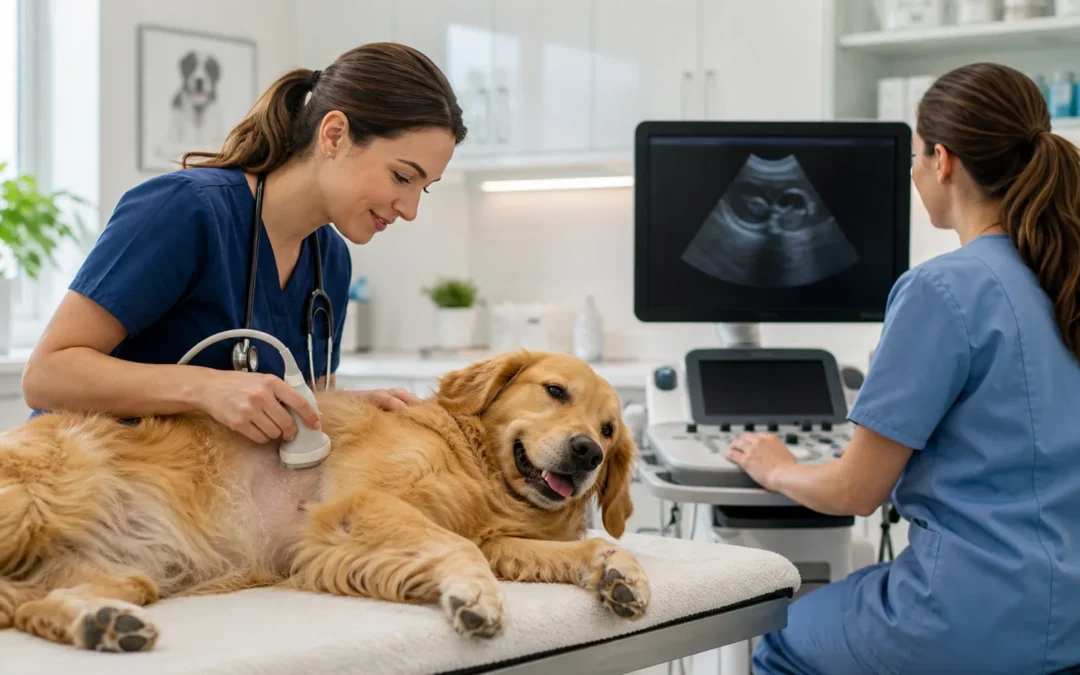
During the appointment, we will help your pet settle into a comfortable position, often on a padded surface. A team member may gently hold or support your pet while the area is examined. We apply gel to the skin so the handheld ultrasound probe can move smoothly and send sound waves through the body.
The probe does not involve needles, surgery, or radiation. Most pets tolerate the process well, and the exam is generally painless. Still, if your pet already has a sore abdomen, an injury, or another sensitive area, we take extra care with positioning and handling.
Appointment time can vary based on the area we need to evaluate, the number of images required, and your pet’s comfort level. Our goal is to gather useful diagnostic information while keeping the experience as calm as possible. At Van Dyke Animal Clinic, we perform ultrasound with the same personalized, low-stress approach we bring to every stage of a pet’s care.
How Results Guide Your Pet’s Next Step in Care
Sometimes, we can discuss initial findings soon after the ultrasound. Other images may need additional review before we can give you a fuller explanation. Ultrasound findings are often most helpful when considered alongside lab work, X-rays, urinalysis, and your pet’s exam results.
Based on what we find, next steps may include monitoring a condition, adjusting medication, discussing diet changes, collecting a sample for testing, planning a procedure, or recommending specialized care when appropriate. Our recommendations are based on what is most appropriate for your pet’s individual condition, not on a standard checklist.
Certain symptoms deserve prompt veterinary attention, whether or not an ultrasound has already been discussed. These can include severe vomiting, a swollen or painful abdomen, trouble urinating, collapse, pale gums, breathing difficulty, or sudden weakness.
Take the Next Step Toward Clearer Answers
September falls during Florida’s peak hurricane season, so it is smart to keep your pet’s medical records, medications, and clinic contact information somewhere easy to access. Severe weather can interrupt routines and travel plans, and having those details ready can make a stressful situation easier to manage.
When a pet is not feeling like themselves, diagnostic testing can replace uncertainty with useful information. An ultrasound may help us better understand what is happening inside the body and shape a care plan around your pet’s specific needs.
Answers And Next Steps For Your Pet
At Van Dyke Animal Clinic, our team is here to help you make informed decisions about your pet’s health. Learn more about veterinary ultrasound in Lutz and the diagnostic services we provide. If you have questions or would like to arrange an appointment, contact us today.